Vermont summer is short, and most of us try to squeeze in as much outside time as we can. A ride on the Burlington Bike Path out to the Colchester Causeway, a swim at Lake Champlain, a hike up Camel’s Hump, or even a Lake Monsters game can turn into a long day in the sun. A little planning helps you stay comfortable and avoid two common summer problems we see: sunburn and tick bites. Tick-related emergency visits have been higher than normal across the Northeast, so it is worth taking ticks seriously, even close to home. 
Skin safety (yes, even on cloudy days)
Vermont has fewer sunny days than many states, but we still have the third highest rate of skin cancer in the country. Clouds do not block the sun’s harmful rays, so “overcast” is not the same as “safe.”
The easiest protection is also the cheapest: cover up. Barrier protection does not wash off, it does not wear out mid-day, and it does not depend on remembering to reapply.
Start with barriers
- Wear a wide-brimmed hat and sunglasses when you can.
- Choose lightweight shirts that cover your shoulders on longer days outside.
- Look for shade during the strongest sun, especially midday.
Use sunscreen
- Choose SPF 30+. Apply a thick layer and reapply every two hours, and after swimming or sweating.
- Keep SPF lip balm handy. Lips burn easily.
Sunburn often happens when the day feels mild. A breeze off the lake or a layer of clouds can make it easy to stay out longer than you planned.
Do a quick skin check. Summer is a good time to notice changes. Use the ABCDEs for moles: Asymmetry, Border (irregular), Color (more than one), Diameter (bigger than a pencil eraser), Evolving (changing over time). If something looks new, different, or changing, schedule a visit with your primary care provider.
A direct note about tanning beds: A “base tan” is still skin damage. Tanning beds deliver concentrated UV radiation and raise skin cancer risk. If you want a tan look, choose a sunless option instead.
Tick safety (Tick bites are more common than you think)
In Vermont, blacklegged ticks are responsible for 99% of tick bite illnesses reported to the Vermont Department of Health. You do not need deep woods to run into ticks. They can be in tall grass, brushy edges of yards, and along trails. Pets can also carry ticks into the home.
Again, barrier protection is a strong first step and it is low-cost:
- Wear long socks and closed shoes when you can.
- Tuck pants into socks in brush or tall grass.
- Choose light-colored clothing so ticks are easier to spot.
Before you go out
- Consider treating shoes, socks, and outdoor clothes with 0.5% permethrin (for clothing and gear, not skin). It kills ticks on contact and stays effective through several washes.
- Use an EPA-registered insect repellent on exposed skin.
- Make sure pets are current on veterinary tick prevention.
After you come in
- Do a full-body tick check, including kids and pets. Ticks often hide behind knees, along waistbands, in armpits, and along the hairline.
- Shower soon after being outdoors when possible.
If you find a tick attached, remove it promptly using fine-tipped tweezers. Pull straight up with steady pressure and clean the area after. For step-by-step visuals and guidance, use Vermont’s tick resources: Prevent tick bites and what to do if you find a tick
We are not asking patients to save ticks. Tick testing is not recommended as a way to decide treatment, and it can create confusion.
When to call CHC
- The tick was engorged, or you are not sure how long it was attached.
- The tick was removed recently and you want to ask about preventive options. CHC has a nursing protocol that allows preventive antibiotics in specific situations.
- You develop symptoms days or weeks after a bite, such as fever, chills, headache, muscle or joint pain, fatigue, nausea or vomiting, swollen lymph nodes, or a rash.
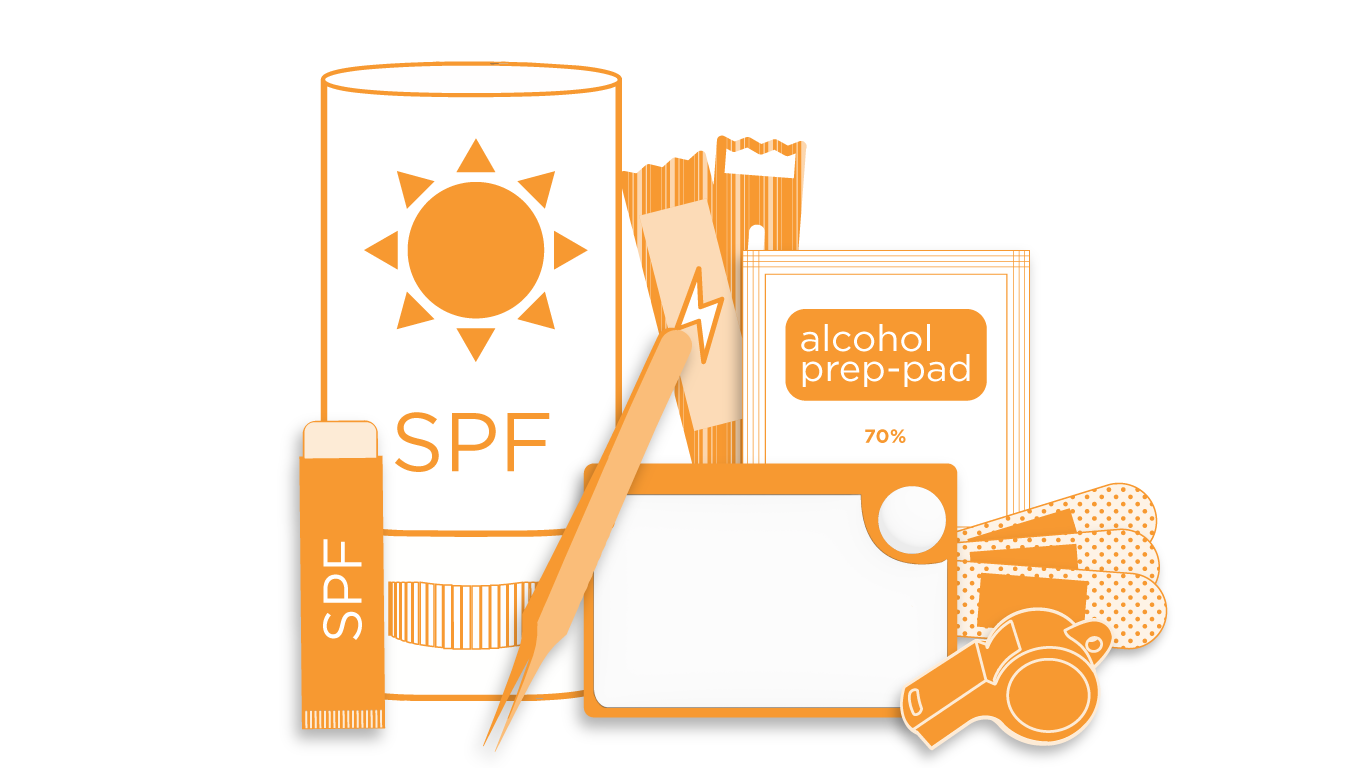
What to keep in your kit (simple checklist)
Keep a small kit in your car, daypack, or by the back door.
Tick tools
- Fine-tipped tweezers
- A few individually wrapped alcohol prep pads
- A small magnifying card (helpful for tiny ticks)
Skin protection
- Sunscreen stick, SPF 30+
- SPF lip balm
Basics for Vermont days outside
- Flexible fabric bandages
- Hydrocortisone packets (itchy bites, mild plant irritation)
- Blister patches (moleskin or hydrocolloid)
- A couple single-serve electrolyte packets
- A small whistle
The point of all this
We want you outside this summer. Movement and fresh air are good for your health. A little preparation helps you keep doing it. If you have a bite, a burn, a rash, or a skin spot that is changing, call us.
Sources and helpful links
- Vermont Department of Health: Summer Safety Tips — https://www.healthvermont.gov/summer-safety-tips
- Vermont Department of Health: Prevent Tick Bites & Tick Bite Illnesses — https://www.healthvermont.gov/disease-control/tick-bite-illnesses/prevent-tick-bites-tickborne-diseases
- Vermont Department of Health: Tick Activity in Vermont — https://www.healthvermont.gov/disease-control/tick-bite-illnesses/tick-activity-vermont